

The Road to Justice: Legal Recourse After Financial Fraud
Financial fraud is not theft. A thief takes your wallet—you know who he was and what he did. A fraudster takes something more, and he does it with your consent. You signed the documents. You transferred the money. You shook his hand. This is why victims rarely seek help immediately. First they must understand that they have been defrauded at all. Then they must understand that it was not their fault.
The financial loss is painful, certainly. But it is not what paralyzes. What paralyzes is something else: the discovery that the world does not operate according to the rules one had assumed were obvious. That you can do everything right and still be robbed. That prudence, caution, a lifetime of experience—all of it proved insufficient.
Fraud is not ordinary theft. A thief takes your wallet. A fraudster takes something more—he takes your belief that you can distinguish truth from falsehood.
Then, in that darkness, the voices appear. They arrive in email inboxes, pop up in advertisements, call at improbable hours. They offer help. They say: we will recover your money. We guarantee success. We have special methods, contacts, capabilities.
This must be said plainly: in most cases, they are the next fraudsters.
They hunt wounded people. They know that someone who has been defrauded is simultaneously desperate and ashamed. That he wants to fix the situation before his family finds out. That he will pay handsomely for hope, even slim hope. The mechanism is brutal in its simplicity—the victim of the first fraud becomes the victim of the second. Sometimes, later, of a third.
How, then, to tell the difference?
There is a simple rule. Whoever promises certainty is lying. Whoever guarantees recovery of funds is lying. Whoever demands large sums upfront, before examining anything, is either lying or incompetent—which, in practice, amounts to the same thing.
An honest lawyer says: I will analyze your case. I will tell you what possibilities I see. I will also tell you what obstacles I see. And I will tell you the truth, even if that truth is difficult.
The work begins with documents. With papers that seemed meaningless on the day of the fraud—confirmations, contracts, correspondence, statements. Now any of them may prove significant. But here the first problem emerges: the internet is ephemeral. The website that existed yesterday may vanish today. The account from which messages were sent gets deleted. Traces blur, and quickly.
This is why the first task is securing evidence. Screenshots. Archived pages. Recording every address, every date, every timestamp. It is tedious work, requiring patience and method. There is nothing dramatic about it. But without it, there is no case.
Then comes the moment many victims dread: reporting to law enforcement. People fear this step. They fear the offices, the procedures, the questions that force them to admit they were fooled. They fear the police officer’s gaze, in which—rightly or not—they perceive judgment.
One must cross this threshold.
A criminal complaint is a document that sets the machinery in motion. Its quality determines whether that machinery moves smoothly or stalls at the outset. A well-prepared complaint—precise, documented, identifying specific acts and individuals—stands a better chance of being taken seriously than a vague grievance.
Civil proceedings may run in parallel. A lawsuit for damages. A motion to freeze the debtor’s assets. In international cases—and financial frauds increasingly cross borders—questions arise about jurisdiction, applicable law, the possibility of enforcing a judgment in another country.
And one more thing must be said, though it is difficult.
Many cases end in failure.
The perpetrator vanishes. The money is transferred to a jurisdiction from which recovery is impossible. Assets that theoretically exist prove unreachable. Statutes of limitations expire. Courts in different countries issue contradictory rulings.
An honest lawyer says this at the beginning, not at the end. He says: here are the chances I see. Here are the risks I see. And he asks: do you still want to proceed?
Many answer: yes.
Not always because they believe they will recover their money. Sometimes because they need to feel they did not surrender without a fight. That they did what they could. That the fraudster—even if he escapes punishment—at least had to explain himself, hide, run.
There is something important in this. A person who has been defrauded has been stripped of control over his own life. Someone else decided how to dispose of his money. Taking legal action—even when its outcome is uncertain—restores part of that control. It provides the sense that one is no longer merely an object of events but, once again, their subject.
This is not a measurable result. It cannot be captured in statistics or entered into a report. And yet—for many people I have spoken with over the years—it proves no less significant than the money itself.
In the end, there remains a question that every victim must answer alone: is it worth it?
There is no single answer. It depends on the amount, on the odds, on the costs, on whether one can bear to return to this matter again and again. It depends on what one is truly seeking—the return of money, or perhaps something else.
But one thing can be said with certainty: the decision should be made on the basis of honest information, not false promises. On the basis of truth, even uncomfortable truth.
Fraud begins with a lie. The way out of it must begin with the truth.
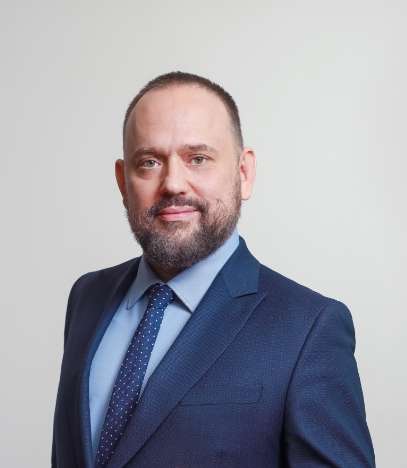
Robert Nogacki – licensed legal counsel (radca prawny, WA-9026), Founder of Kancelaria Prawna Skarbiec.
There are lawyers who practice law. And there are those who deal with problems for which the law has no ready answer. For over twenty years, Kancelaria Skarbiec has worked at the intersection of tax law, corporate structures, and the deeply human reluctance to give the state more than the state is owed. We advise entrepreneurs from over a dozen countries – from those on the Forbes list to those whose bank account was just seized by the tax authority and who do not know what to do tomorrow morning.
One of the most frequently cited experts on tax law in Polish media – he writes for Rzeczpospolita, Dziennik Gazeta Prawna, and Parkiet not because it looks good on a résumé, but because certain things cannot be explained in a court filing and someone needs to say them out loud. Author of AI Decoding Satoshi Nakamoto: Artificial Intelligence on the Trail of Bitcoin’s Creator. Co-author of the award-winning book Bezpieczeństwo współczesnej firmy (Security of a Modern Company).
Kancelaria Skarbiec holds top positions in the tax law firm rankings of Dziennik Gazeta Prawna. Four-time winner of the European Medal, recipient of the title International Tax Planning Law Firm of the Year in Poland.
He specializes in tax disputes with fiscal authorities, international tax planning, crypto-asset regulation, and asset protection. Since 2006, he has led the WGI case – one of the longest-running criminal proceedings in the history of the Polish financial market – because there are things you do not leave half-done, even if they take two decades. He believes the law is too serious to be treated only seriously – and that the best legal advice is the kind that ensures the client never has to stand before a court.