

Frozen USDT: When Tether Actually Blocks Your Crypto Wallet — and When It’s a Scam
Is your USDT frozen? Has your cryptocurrency wallet been blocked? Before you pay any “unblocking fee,” read this article. In most cases, a Tether freeze notification is a scam — but real freezes do happen.
In January of this year, Tether executed one of the most dramatic enforcement actions in cryptocurrency history: a hundred and eighty-two million dollars in USDT, frozen across five digital wallets on the Tron blockchain, all within twenty-four hours. Since December, 2023, the company has blocked more than three billion dollars across some seven thousand addresses. The figures are staggering, and they testify to an unprecedented level of coöperation between a stablecoin issuer and law enforcement agencies around the world.
The problem is that criminals know these statistics, too — and they have learned to exploit them with remarkable cynicism.
Who Is Tether and Why Can They Freeze Your Cryptocurrency?
To understand the paradox of USDT freezes, one must first understand the company itself. Tether is controlled by a remarkably small group of people: Giancarlo Devasini, a sixty-one-year-old Italian and former plastic surgeon, holds more than fifty per cent of the voting shares and has amassed a fortune estimated at twenty-two billion dollars. Paolo Ardoino, the C.E.O. since late 2023, owns roughly twenty per cent; Jean-Louis van der Velde, the former chief executive, holds somewhere between ten and fifteen.
The story of Tether is a story of radical transformation. The company was founded in 2014 as Realcoin, by Brock Pierce, Reeve Collins, and Craig Sellars — none of whom remain involved. Pierce has claimed that he transferred his entire stake to minority partners in 2015 for nothing, and never made a cent from the venture.
For years, the company operated in a gray zone. In 2018, the Wall Street Journal revealed that a co-owner named Stephen Moore had signed falsified invoices and contracts to circumvent the banking system. Moore himself admitted, in an e-mail, that he “would not want to argue any of the above in a potential fraud/money-laundering case.” Tether relied on the services of Crypto Capital Corp., a Panamanian shadow bank accused of laundering billions for Colombian drug cartels. When American authorities shut down Crypto Capital, they froze eight hundred and fifty million dollars belonging to Tether and its sister company, Bitfinex.
The consequences arrived in due course: a forty-one-million-dollar fine from the Commodity Futures Trading Commission in 2021 for misleading statements about USDT’s reserves. (The commission found that, between 2016 and 2018, Tether had held sufficient reserves on only twenty-seven per cent of days.) Another eighteen and a half million went to the New York Attorney General’s office, settling allegations that the company had used its reserves to cover up losses at Bitfinex.
A United Nations report from January, 2024, identified USDT as one of the primary instruments for money laundering in Southeast Asia — illegal online casinos, underground banking, cyberfraud operations, mostly on the Tron blockchain.
How Tether Freezes USDT Wallets — The Blocking Mechanism
Starting in 2024, Tether underwent a metamorphosis. That September, the company launched the T3 Financial Crime Unit, in partnership with Tron and the blockchain-analytics firm TRM Labs — a division that works directly with law-enforcement agencies worldwide. The results have been striking: more than three hundred million dollars in frozen criminal assets, monitoring of transactions exceeding three billion dollars, support for investigations across twenty-three jurisdictions on five continents.
Today, Tether collaborates with more than three hundred law-enforcement agencies in some sixty jurisdictions. This January, the Financial Action Task Force hailed the T3 unit as a “model blockchain crime-fighter.” According to AMLBot, the assets frozen by Tether are thirty times greater than those blocked by Circle, its chief competitor.
The USDT freeze mechanism is straightforward: Tether has a function built into its smart contracts that allows it to freeze funds at any address. These freezes target wallets linked to O.F.A.C. sanctions, money laundering, terrorism financing, so-called pig-butchering scams, and exchange hacks. In the case of addresses connected to Hamas, Tether blocked seventeen wallets an average of twenty-eight days before official seizure orders were issued; the earliest instance came forty-five days in advance.
It is precisely this real, documented capability that has become the ideal pretext for a new generation of cryptocurrency scams.
Frozen USDT Scams — How Criminals Exploit Blockchain Compliance
The “frozen funds” scam is not an invention of the cryptocurrency era. The mechanism has been known for decades as advance-fee fraud — a scheme in which the victim pays up front for promised benefits that never materialize. Variants include fake bank guarantees, blocked-funds loan scams (loans with astronomical weekly interest rates of thirty per cent), and prime-bank-instrument fraud (access to “secret markets” unavailable to ordinary investors).
The common thread: there is always a reason the funds are “blocked” — unpaid taxes, regulatory requirements, administrative fees, legal holds. There is always a solution involving an up-front payment. And, after the first payment, there are always new complications requiring additional sums.
Cryptocurrencies — and USDT in particular — have lent this scheme fresh credibility. Because Tether really does freeze wallets. Because the media really does report on billions being blocked. Because the average user has heard of compliance and O.F.A.C. sanctions, even if he doesn’t understand the details.
The “Frozen Crypto Wallet” Scam Pattern
The pattern is almost always the same. A victim encounters an investment platform — often marketed as DeFi staking, liquidity mining, or an innovative crypto project. The interface looks professional; the charts display impressive gains. Everything works flawlessly until the user tries to withdraw funds.
Then comes the message: “Your wallet has been frozen by the Tether blockchain due to suspected money laundering.” A representative from “compliance” explains that unblocking requires payment of a verification fee, a capital-gains tax, or a security deposit. The amounts escalate with each attempt — first a few hundred dollars, then thousands, then tens of thousands.
Fake USDT Tokens — Advanced Scam Method
A more sophisticated variant runs in parallel: scams using counterfeit USDT tokens (so-called Flash USDT). Criminals create tokens on inexpensive blockchains — usually Tron or Binance Smart Chain — that appear identical to genuine USDT in a wallet. Same name, same icon, same balance. The difference lies in the smart-contract address:
Official USDT Contract Addresses:
- Ethereum (ERC-20):
0xdAC17F958D2ee523a2206206994597C13D831ec7 - Tron (TRC-20):
TR7NHqjeKQxGTCi8q8ZY4pL8otSzgjLj6t
The fakes have different addresses, but most users never think to check. The result? The victim sees millions of dollars in a wallet that cannot be sold or exchanged. Transfer attempts fail, and “technical support” explains that it’s a Tether freeze — and, once again, demands payment for unblocking.
How to Recognize a Cryptocurrency Freeze Scam — Warning Signs
Several elements should raise immediate suspicion:
- Unsolicited offers of large sums requiring minimal effort
- Funds described as “blocked” or “frozen” that can be released only through payment
- Requests for wire transfers to intermediaries rather than directly to banks
- Official-looking but slightly misspelled e-mail addresses or institutional names
- Time pressure and “limited offers”
- Invocations of the Federal Reserve, the I.M.F., or the World Bank
- Repeated fee requests after initial payments
- Promises of astronomical returns with low risk
The fundamental rule: legitimate financial institutions never require up-front fees to release available funds. Tether does not charge fees to unblock a wallet. No “verification fee” will defrost cryptocurrency.
USDT Freeze Verification — How to Check If Your Wallet Is Really Blocked
A few simple steps can distinguish a real freeze from a scam:
1. Check the token’s contract address — every wallet (MetaMask, Trust Wallet, Ledger) allows you to view token details and compare the contract address against the official one.
2. Verify the status in a blockchain explorer:
- For Ethereum: Etherscan.io
- For Tron: Tronscan.org
These tools display the actual state of a wallet and indicate whether the address appears on a blacklist.
3. Consider the source of the information — Tether does not communicate through messaging apps, Telegram, or investment platforms. Official correspondence comes exclusively from an @tether.to address or from law-enforcement agencies.
What to Do If Tether Has Actually Frozen Your USDT Wallet
If verification confirms that a wallet has actually landed on Tether’s blacklist, the procedure is lengthy but clearly defined.
Contact Tether:
- General matters: support@tether.to
- Legal and compliance issues: inforequests@tether.to
- Contact form: https://tether.to/contact-us/
Required documentation:
- Full identity verification (KYC)
- Proof of the funds’ origin
- Transaction history from blockchain
- Explanation of USDT source
The process can take anywhere from several weeks to two years. In some cases, it may be worth considering assistance from a lawyer specializing in cryptocurrency matters — particularly when the frozen funds are substantial.
You’ve Fallen Victim to a Crypto Scam — What to Do
If you suspect you’ve become a victim of a frozen cryptocurrency scam:
- Immediately cease contact with the people/platform claiming your funds are “blocked”
- Do not pay any additional funds under the pretext of “unblocking fees”
- Report the incident to the police (in the U.S.: FBI’s Internet Crime Complaint Center; in Poland: Central Cybercrime Bureau)
- Preserve evidence — screenshots, emails, wallet addresses, communication history
- Consider legal consultation — assistance in criminal and economic matters may be essential when attempting to recover funds
The Tether Compliance Paradox — Summary
The irony here is bitter. Tether — a company criticized for years for facilitating money laundering — has become one of the most aggressive compliance enforcers in the cryptocurrency industry. The transformation is real: the T3 Financial Crime Unit is operational, billions of dollars have been frozen, the F.A.T.F. has praised the model of coöperation.
Yet that same transformation has created ideal conditions for scammers. The awareness that Tether can actually freeze a USDT wallet lends credibility to false messages about freezes. Media reports of coöperation with the F.B.I. and the Secret Service add authenticity to fabricated stories about “compliance investigations.”
In December, the International Consortium of Investigative Journalists noted that, despite these improvements, Tether still allows significant funds to flow through addresses flagged as suspicious. Critics point out that the company’s reactive approach leaves criminals enough time to move their assets before intervention.
For the average cryptocurrency user, this means heightened vigilance. Information about a frozen wallet that comes from an investment platform or a “financial adviser” is almost certainly a scam. Real USDT freezes do not require additional payments. And verification in a blockchain explorer takes a minute — one that could save a lifetime’s savings.
Need legal assistance with a cryptocurrency matter? Contact us — we handle cases involving white-collar criminal charges, including those related to cryptocurrency and money laundering. Our team provides court representation and litigation support for complex financial crime matters.
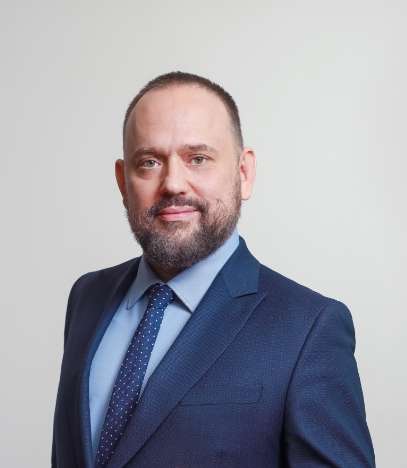
Robert Nogacki is a Polish attorney at law (radca prawny), the founder and managing partner of Kancelaria Prawna Skarbiec (Skarbiec Law Firm), which has operated continuously since 2006.
The law is equal for everyone, but the parties rarely are: on one side stands an organization with time, money, and lawyers, on the other a person with one business, one nest egg, and one life.
Clients rarely come to him with a legal problem. They come with a problem that also has a legal side: an audit that began with a single invoice, money entrusted to someone who has disappeared, a company that has to be passed on before it is too late. Most such matters are decided long before the first letter is written, in decisions made without asking and in deadlines nobody remembered. So he begins by asking how the client got here, not what the client should have done.
He advises entrepreneurs and families from more than a dozen countries, including those whose accounts the tax office has just seized and who do not know what to do tomorrow morning. He defends them in tax audits, customs and fiscal inspections, disputes with the tax authorities, and criminal tax proceedings. He represents victims of investment fraud and Ponzi schemes. He helps families set up family foundations and plan succession, so that a life’s work outlasts a single generation.
Not every case can be won. Every case can be run so that the client knows where they stand. Since 2006 he has represented the victims in the WGI case (Warszawska Grupa Inwestycyjna, the Warsaw Investment Group), one of the longest criminal cases in the history of the Polish financial market, because some things must not be left half finished, even when they take two decades. In the case of the collapsed cryptocurrency exchange Zonda (Zondacrypto, operated by BB Trade Estonia OÜ), he represents several hundred victims in the criminal investigation conducted by Poland’s National Prosecutor’s Office and in the Estonian bankruptcy proceedings.
Kancelaria Prawna Skarbiec is listed in the rankings of Poland’s largest tax advisory firms published by Dziennik Gazeta Prawna and Rzeczpospolita, and it is a four-time recipient (2015 to 2018) of the European Medal awarded by the Business Centre Club and the European Economic and Social Committee. Robert Nogacki publishes regularly, in the press and on the firm’s website, for people who have a problem rather than a law degree, because a legal opinion the client cannot understand protects only the lawyer.
He believes that the best legal advice is the kind that means the client never has to appear in court.