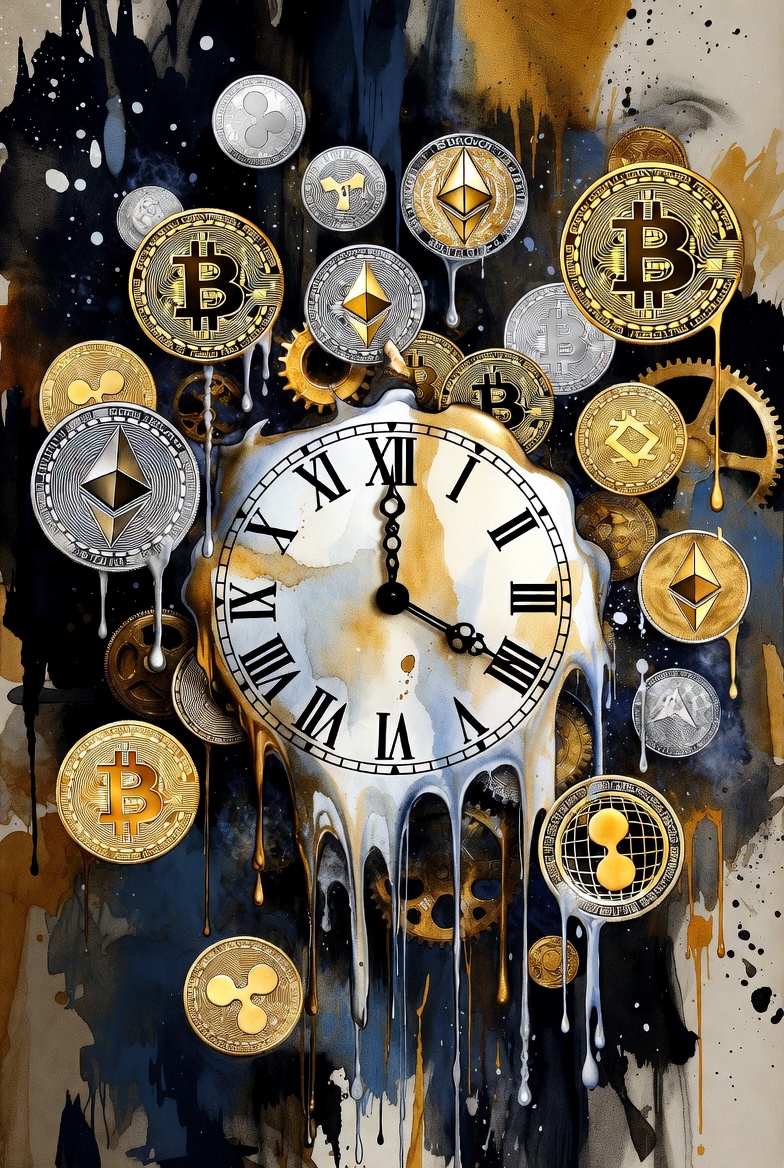

Ponzi scheme. The Geometry of Greed
In December of 1919, Charles Ponzi—an Italian immigrant of unremarkable stature—sat in a rented office in Boston, scheming his way toward wealth. He had stumbled upon an idea involving international reply coupons, those modest slips of paper that allowed correspondents to prepay return postage across borders. In theory, one could purchase them cheaply in war-ravaged Europe and redeem them at a profit in America, exploiting the wreckage of postwar exchange rates. In practice, the arbitrage was entirely unworkable; converting the coupons into actual cash bordered on the impossible. Ponzi grasped this quickly enough, but the realization did nothing to prevent him from promising investors a fifty-per-cent return in forty-five days.
By July of 1920, he was taking in nearly a million dollars a day. Three-quarters of the Boston police force had invested. When a newspaper published an article questioning the legitimacy of his operation, Ponzi—in a gesture of apparent transparency—invited federal auditors to examine his books. The next morning, a line of furious investors demanding their money back stretched around the block outside his office. The irony here is exquisite: his attempt to prove his honesty became the proximate cause of his ruin.
The mechanics of a Ponzi scheme are not complicated. The operator collects funds from investors, promising extraordinary returns, then pays earlier investors with money from later ones while siphoning off a substantial portion for himself. It presents itself as a kind of financial perpetual-motion machine, but the machine generates only illusion, sustained exclusively by the continuous influx of new capital. When that influx slows, the gears seize, and the scheme collapses. What’s puzzling is not that Ponzi schemes fail—they must, eventually, by mathematical necessity—but that they continue to emerge and succeed, despite a century of spectacular scandals and aggressive prosecution.
Bernie Madoff ran his operation for two decades, possibly longer. When it collapsed in 2008, it emerged that he had defrauded investors of approximately sixty-five billion dollars—the largest such scheme in history. Madoff was a respected figure on Wall Street, a former chairman of NASDAQ. Unlike most fraudsters, he also ran a legitimate brokerage business, which rendered him nearly undetectable. Harry Markopolos, a financial analyst, warned the Securities and Exchange Commission repeatedly about Madoff’s practices, submitting a detailed report in 2005 that explained precisely why the firm had to be a Ponzi scheme. No one listened.
Madoff promised steady returns of ten to fifteen per cent annually—nothing spectacular, but remarkably consistent. It was precisely this consistency that should have aroused suspicion. Legitimate investments are subject to market fluctuations; they have bad quarters. Madoff employed staff whose sole purpose was to fabricate trades and generate fictitious account statements. When he grew concerned that showing gains every single month might appear suspicious, he instructed them to introduce occasional fake losses.
The scheme unraveled during the 2008 financial crisis, when investors began withdrawing funds en masse. Madoff confessed to his family on December 9th and was arrested two days later. He was sentenced to a hundred and fifty years in prison and died there in 2021. Among his victims was Elie Wiesel, the Holocaust survivor and Nobel laureate, who lost twelve million dollars in personal savings and fifteen million from his foundation’s endowment. Madoff’s son Mark hanged himself after being sued for alleged complicity in the fraud.
Remarkably, Madoff’s victims have recovered approximately ninety-four per cent of their recognized losses—an exceptional outcome compared with most financial-fraud cases. This was accomplished through the aggressive work of a court-appointed trustee and so-called clawback lawsuits against “net winners,” investors who had withdrawn more than they put in. These suits are deeply controversial. The defendants are innocent people who had no knowledge of the fraud and believed their withdrawals to be legitimate profits. The legal theory holds that the money they received originated from other defrauded investors, so everyone should be treated equally. The problem is that most of these withdrawn funds had already been spent—on living expenses, homes, children’s educations. For many, forced repayment is simply impossible.
OneCoin launched in 2014 as an alternative to Bitcoin—supposedly simpler and safer. Its founder, Ruja Ignatova, known as the “Cryptoqueen,” vanished in October of 2017, boarding a Ryanair flight to Athens. No one has seen her since. The F.B.I. placed her on its Ten Most Wanted list, offering a five-million-dollar reward for information leading to her capture.
OneCoin was a Ponzi scheme with a pyramid structure, generating approximately four billion dollars worldwide, according to American prosecutors. The cryptocurrency was never actively traded; you couldn’t buy anything with it. There was no OneCoin blockchain, no payment system, despite the company’s claims. The primary business consisted of selling educational materials—most of them plagiarized—through a multi-level-marketing structure.
BitConnect, founded by Satish Kumbhani and promoted by Glenn Arcaro, operated from 2016 to 2018 as what the Department of Justice called a “textbook” Ponzi scheme, defrauding investors of $2.4 billion globally. The company claimed to have developed a proprietary “BitConnect Trading Bot” and “Volatility Software” that would exploit cryptocurrency market fluctuations, promising returns approaching one per cent daily, or roughly forty per cent monthly.
In reality, the bot was a fiction that produced nothing. YouTube videos promoted the platform with testimonials from supposedly successful investors; Instagram influencers pushed the cryptocurrency to their followers. Before the platform collapsed, prominent members of the crypto community, including Ethereum founder Vitalik Buterin, had publicly accused BitConnect of being a Ponzi scheme.
The rise of cryptocurrency has created fresh opportunities for such fraud. Con artists exploit the complexity of blockchain technology and the media frenzy surrounding digital assets. The absence of regulation in many areas of cryptocurrency makes it easier to operate without oversight. Some deploy Ponzi schemes directly on blockchains via smart contracts, packaged as investment projects or gambling games promising enormous returns. Researchers estimate that ninety-two per cent of cryptocurrency scams are Ponzi schemes.
Ponzi schemes exploit fundamental weaknesses in human psychology. Greed is the obvious one—the promise of quick riches fires the imagination. But equally powerful is the fear of missing out. When you watch friends and family growing wealthy (or apparently so), it’s difficult to remain indifferent. This social proof is extraordinarily persuasive.
Fraudsters frequently employ what’s known as affinity fraud, targeting members of identifiable groups by exploiting shared characteristics or bonds. These might be religious communities, ethnic groups, professional organizations, social clubs, or demographic cohorts such as the elderly. The perpetrator is often a member of the group, or poses as one, leveraging the trust and friendship that exists within the community. Madoff largely targeted affluent Jewish communities and organizations.
Affinity fraud is particularly insidious because victims may be reluctant to report their losses to authorities, preferring to resolve problems within their own community.
The sunk-cost fallacy compounds the damage. Once people have invested, they have psychological difficulty admitting error. They invest more money hoping to recover losses, which only deepens their financial harm. Cognitive dissonance causes victims to rationalize their decisions and ignore warning signs.
Confirmation bias plays its part as well—investors seek out information that validates their belief in the investment while dismissing contradictory evidence. They want to believe the opportunity is real, so they ignore the red flags. Excessive optimism leads people to overestimate the probability of positive outcomes and underestimate negative ones, making them susceptible to promises of guaranteed high returns.
The warning signs are well documented by now. Unrealistic returns are the first indicator. Any investment opportunity promising consistently high returns with little or no risk should provoke extreme skepticism. Every legitimate investment carries some degree of risk, and investments offering higher returns typically involve greater risk. If returns remain consistently positive regardless of market conditions, that’s a primary warning sign.
Excessive consistency is suspicious. Legitimate investments experience fluctuations and occasional losses based on market conditions. If an investment shows positive returns every month or quarter without any volatility, it’s probably a fraud.
Lack of transparency is a red flag. Ponzi operators are notoriously vague about their business models, investment strategies, and how they achieve returns. If promoters can’t or won’t explain the investment in comprehensible terms, don’t invest. Beware of investments that sound complicated and then deflect questions by claiming proprietary, secret formulas or strategies that only they understand.
Missing or questionable documentation is a problem. Legitimate investments provide detailed documentation, including prospectuses, offering circulars, or disclosure statements. Warning signs include little or no written documentation, errors in account statements, inconsistent financial reports, and refusal to provide audited financial statements.
Unregistered investments and unlicensed sellers are an enormous problem. Securities laws require investment professionals and firms to be licensed or registered. Most Ponzi schemes involve unlicensed individuals or unregistered securities. Always verify registration status.
Difficulty receiving payments should raise alarm. Be suspicious if you don’t receive expected payments or have trouble withdrawing your investment. Ponzi operators sometimes encourage rolling over investments into new opportunities or pressure investors to keep their money invested longer.
Pressure to recruit new investors is a warning sign. If there’s significant emphasis on attracting new investors, with incentives offered for recruitment, that may indicate a Ponzi scheme.
High-pressure sales tactics are a red flag. Legitimate investment opportunities allow time for due diligence and consultation with advisers. Fraudsters create a false sense of urgency with phrases like “limited-time offer” or “exclusive opportunity ending soon.”
The financial devastation caused by Ponzi schemes extends far beyond the simple loss of invested capital. Victims are forced to sell property, including their homes. Retirees must return to work after losing their retirement savings. Many victims declare bankruptcy. Roughly twenty per cent of fraud victims have difficulty obtaining credit afterward. The self-employed may lose their livelihoods entirely.
The emotional consequences are severe and long-lasting. Depression and anxiety are common among victims. Physical health problems frequently develop as a result of stress. Some victims attempt suicide. Feelings of shame, guilt, and self-blame are pervasive. Victims describe feeling as though they’ve been violated. Trust in financial systems and institutions erodes.
Ponzi schemes destroy relationships and communities. Family disintegration and loss of trust among relatives. Destruction of friendships, particularly when victims recruited friends. Loss of trust in business communities. The impact is especially devastating in cases of affinity fraud, where entire communities are victimized.
A hundred years after Charles Ponzi’s downfall, we find ourselves in the same place. Despite increasingly sophisticated enforcement by regulatory agencies, despite high-profile trials and lengthy prison sentences, despite financial-education programs and red-flag checklists—Ponzi schemes continue to emerge and succeed.
Perhaps the problem lies not in insufficient education or law enforcement. Perhaps it lies in something fundamental to human nature—a desperate desire to believe that we can bypass the tedious work of wealth accumulation, that a shortcut exists, that this time will be different.
When Ponzi sat in his Boston office in the winter of 1920, watching the line of investors winding around the block, he probably already knew his scheme would collapse. But he couldn’t stop himself. Neither could they. And a hundred years later, neither can we.
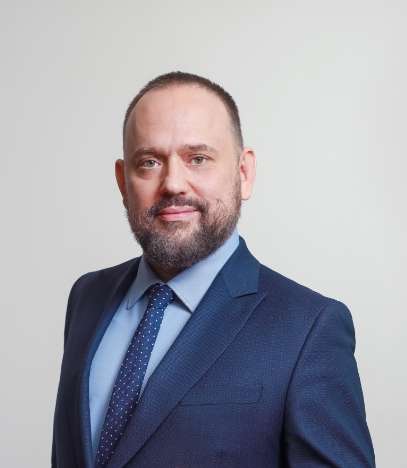
Robert Nogacki – licensed legal counsel (radca prawny, WA-9026), Founder of Kancelaria Prawna Skarbiec.
There are lawyers who practice law. And there are those who deal with problems for which the law has no ready answer. For over twenty years, Kancelaria Skarbiec has worked at the intersection of tax law, corporate structures, and the deeply human reluctance to give the state more than the state is owed. We advise entrepreneurs from over a dozen countries – from those on the Forbes list to those whose bank account was just seized by the tax authority and who do not know what to do tomorrow morning.
One of the most frequently cited experts on tax law in Polish media – he writes for Rzeczpospolita, Dziennik Gazeta Prawna, and Parkiet not because it looks good on a résumé, but because certain things cannot be explained in a court filing and someone needs to say them out loud. Author of AI Decoding Satoshi Nakamoto: Artificial Intelligence on the Trail of Bitcoin’s Creator. Co-author of the award-winning book Bezpieczeństwo współczesnej firmy (Security of a Modern Company).
Kancelaria Skarbiec holds top positions in the tax law firm rankings of Dziennik Gazeta Prawna. Four-time winner of the European Medal, recipient of the title International Tax Planning Law Firm of the Year in Poland.
He specializes in tax disputes with fiscal authorities, international tax planning, crypto-asset regulation, and asset protection. Since 2006, he has led the WGI case – one of the longest-running criminal proceedings in the history of the Polish financial market – because there are things you do not leave half-done, even if they take two decades. He believes the law is too serious to be treated only seriously – and that the best legal advice is the kind that ensures the client never has to stand before a court.